cd213 - A Paramedic's Frustration: My Mother-in-Law's Frequent 911 Calls and Her Loneliness
The Emotional Burden of Care: Understanding the Loneliness Behind Frequent 911 Calls in Aging Loved Ones
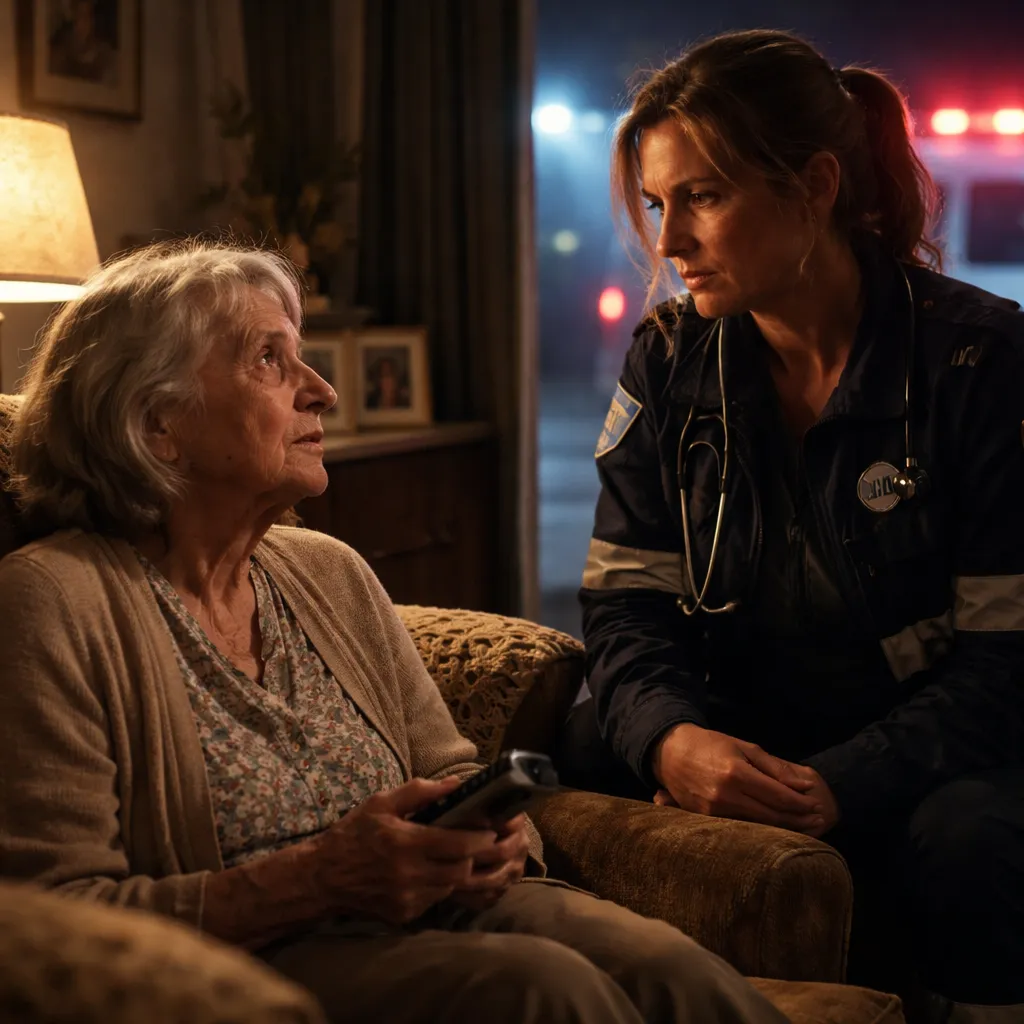
As a paramedic, witnessing the emotional and practical complexities of life and health emergencies is part of everyday reality. But when personal connections intersect with professional duties, it challenges the norms of caregiving. This situation becomes particularly poignant in stories like that of Lorraine, a healthy 72-year-old who frequently calls 911 under circumstances that suggest a deeper emotional struggle. Understanding her situation helps reveal vital lessons about supporting our aging loved ones, which is crucial not just for Lorraine, but for many in similar situations.
Contextual Insights
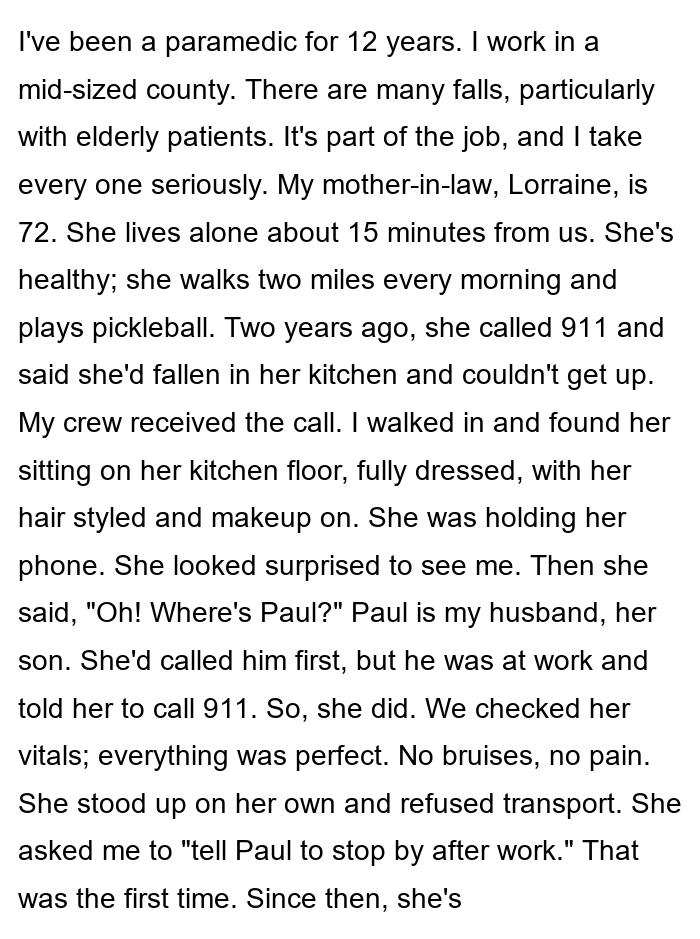
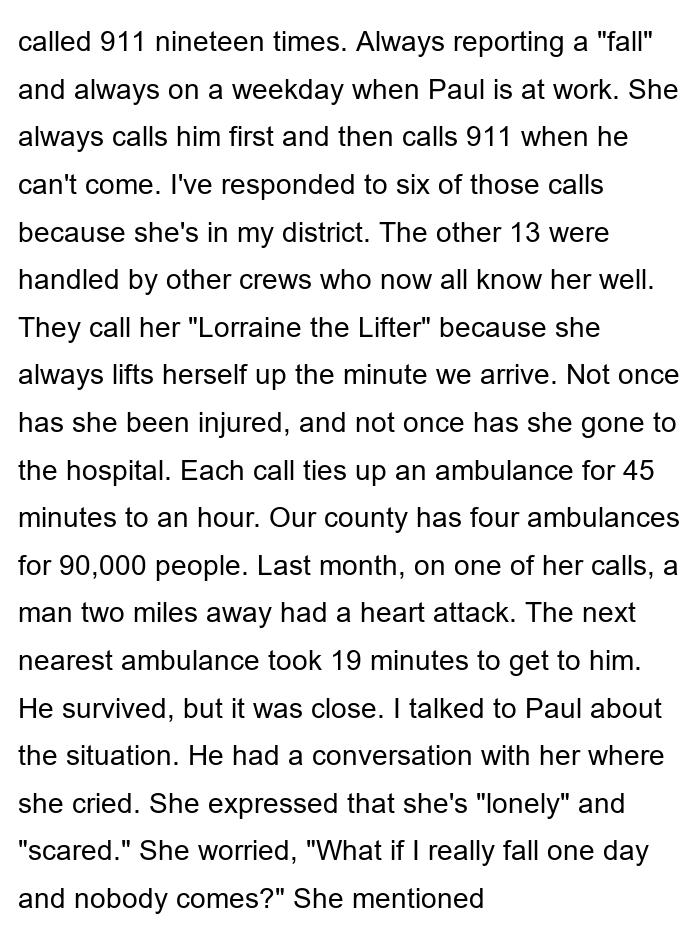
The issues surrounding Lorraine's repeated calls to 911 for assistance with her 'falls' stem from a combination of emotional distress and practical challenges of aging. While Lorraine shows signs of being physically healthy, her emotional state appears fragile. Many elderly individuals experience bouts of loneliness, significantly impacting their mental health. Statistics show that isolation can lead to increased anxiety and fear of falling or being left alone, prompting some to seek urgent assistance even when physical help isn’t needed.
Furthermore, the continuous cycle of 911 calls creates strain on emergency services, diverting essential resources from those in urgent need. In Lorraine’s case, her actions, driven by emotional needs, not only reflect her loneliness but also pose real dangers to others, as she is inadvertently jeopardizing the timely response necessary for genuinely life-threatening emergencies.
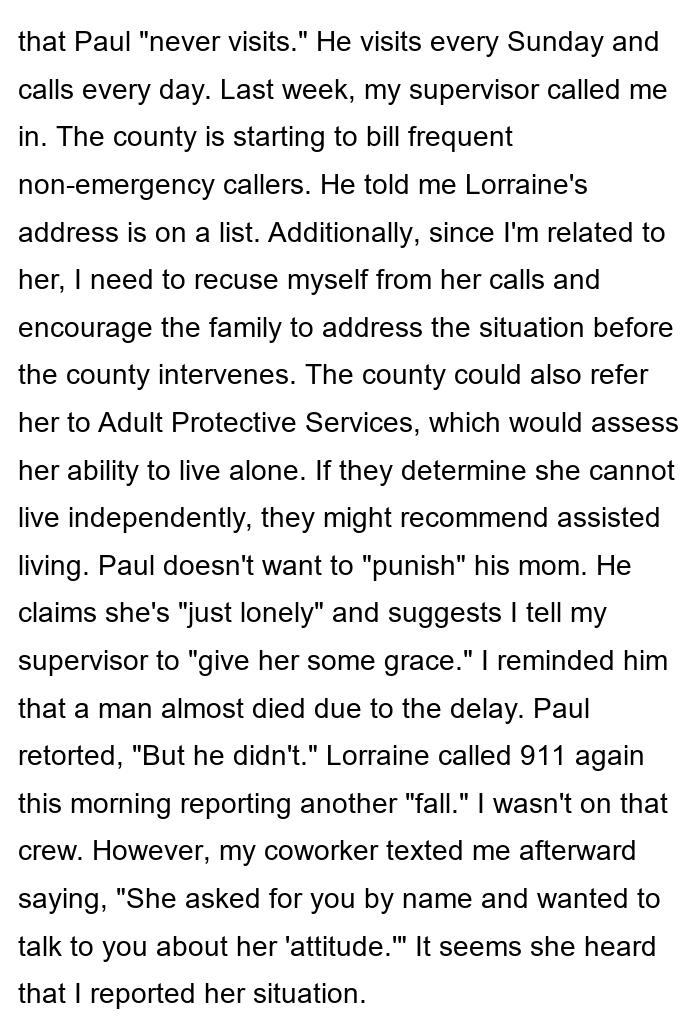
Addressing the situation requires a two-fold approach: recognizing Lorraine’s emotional distress and finding alternative support systems for her. Community resources, local senior centers, and even telehealth options can provide a blend of emotional and social support while reducing the strain on emergency services. Engaging with professionals to assess her living conditions may also help in understanding her needs better, facilitating a safer living environment.
Understanding and addressing these issues is vital, not only as a means of personal compassion but also as an essential step towards practical solutions for aging populations. Families should be encouraged to take proactive measures, such as regular check-ins, therapy, or activities to improve social engagement amongst the elderly, so that isolation does not breed reliance on emergency services.
Life Advice
For families dealing with aging relatives, it’s crucial to recognize the signs of loneliness and the impact emotional well-being has on physical health. Lorraine’s story serves as a potent reminder that communication is vital. Regularly check in with elderly family members, not just through phone calls but visits or activities that can help reduce feelings of isolation. Simple gestures, like a shared meal or a game night, can significantly improve their quality of life.
It’s equally important to open dialogues about feelings of safety and autonomy. Encourage your loved ones to express their fears, and validate their feelings while guiding them towards appropriate action, whether it’s through community programs or arranging regular check-ups with caregivers. Encouraging them to rely on loved ones for emotional support rather than emergency services can help cultivate a more balanced approach to addressing their needs.
Additionally, consider creating a support network with other family members or friends to ensure someone is always checking in, thus alleviating the burden on any one individual. Professional support, whether from counselors specializing in elderly care or community resources, can also be beneficial. They can provide insights and coping strategies that families may not have considered, guiding both the individual and their family towards healthier solutions.
Finally, ensure awareness of local resources, such as senior centers or social programs that can provide camaraderie and reduce loneliness. By organizing these resources, families can help their loved ones feel more connected, safe, and ultimately lessen their reliance on emergency services.
Conclusion
Lorraine's story highlights the complexities of caring for aging loved ones, particularly when emotional struggles influence their behavior. It underscores the necessity of understanding the underlying issues that may prompt seemingly irrational decisions, such as frequent 911 calls. As we navigate this tricky terrain, fostering a balance of emotional support and practical solutions can help our elderly family members thrive rather than merely survive. Addressing these needs not only benefits individuals like Lorraine but strengthens family bonds and ensures that essential resources are available for those who truly need them. Encouraging open communication, regular engagement, and the exploration of community support can create a safety net for our aging relatives, allowing them to maintain their independence with dignity. It’s important to act before the situation escalates, considering professional assistance where needed, ensuring that no one feels isolated or overlooked in their later years.
The community verdict, based on 0 comments.
Keep reading
 NTA
lv-61 - A Family Hardware Store's Legacy: My Mother's Dying Wish to Reunite with My Brother
Navigating Family Betrayal and Business Rivalry During a Mother's Final Wish for Unity Balancing family dynamics with business decisions can be one of life's most challenging dilemmas. This story encapsulates a conflict rooted in a family-r
 NTA
lv-72 - After Six Years of Night Classes, I Graduate Nursing School on the Same Day as My Ex-Husband's Wedding
Navigating Graduation Achievements and Family Dynamics: A Mother's Emotional Journey on a Complicated Day The journey to achieving lifelong dreams often comes with unforeseen challenges, especially in the realm of family dynamics. This stor